At the frontier of economics
and the living world
PhD in Economics
Lecturer-Researcher at CY Tech – IEG · THEMA Lab
See background →
Loading…
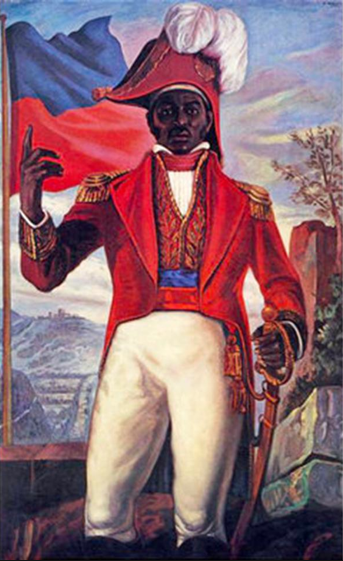
Jean-Jacques Dessalines
Founding father of Haiti
Blog · Coming soon
Who pays for the Transition?
Social Justice & Climate Change
Eurostat · sdg_07_40 · 2023
Share of renewables in gross final energy consumption (EU-27)
The RED III directive sets a 42.5% renewables target by 2030. The share rose from 8.5% in 2004 to 24.5% in 2023, driven by the strong growth of solar and wind — particularly since the 2022 energy crisis and the REPowerEU plan.

Main lines of inquiry
Environmental economics
Valuation of environmental externalities, design of economic instruments — Pigouvian taxes, tradable permit markets — and cost-benefit analysis of natural-resource protection policies. My work builds on the tradition of neoclassical environmental economics while drawing on the contributions of ecological economics.
Energy & resource economics
Modelling of energy markets, economics of exhaustible and renewable resources, and analysis of co-production systems in bioenergy.
Climate change & energy transition
Decarbonisation pathways, macroeconomic impacts of climate policy, and the role of sustainable aviation fuels (SAF) in decarbonising air transport.
Sustainable development
Strong and weak sustainability indicators, the compatibility of economic growth with planetary boundaries, and the circular economy.
Social welfare & inequality
Distributional effects of energy and climate policy, the biofuel 'inequality paradox', and the conditions for social acceptability of the ecological transition.